What Is a Functional Hormone & Gut Health Practitioner?
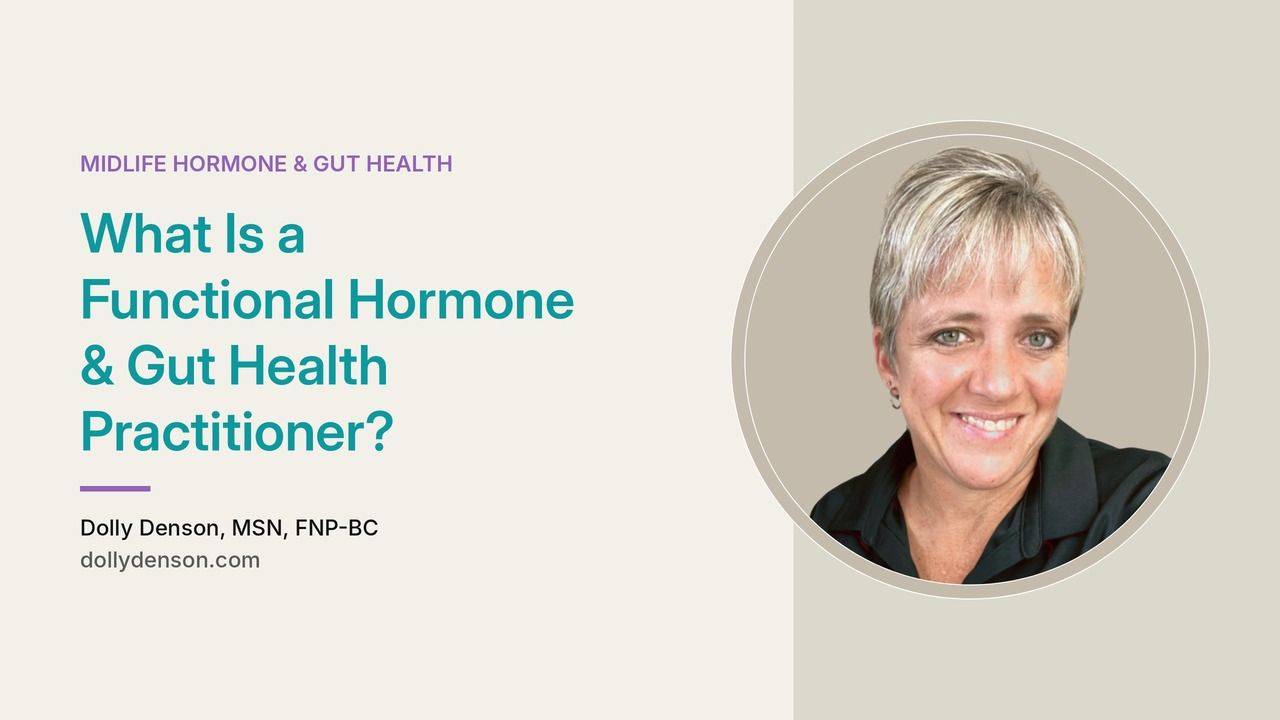
By Dolly Denson, MSN, FNP-BC · Functional Hormone & Gut Health Practitioner
The short answer: A Functional Hormone & Gut Health Practitioner helps you understand how your hormones, metabolism, and gut connect, especially during big transitions like perimenopause and menopause. Instead of looking at one symptom at a time, we look at the whole picture: your history, your daily rhythms, and, when it makes sense, functional testing. The work is education and guided support. It sits alongside your medical care, not in place of it.
Why I use this title
I chose this title carefully.
I've spent more than 30 years in healthcare, including as a board-certified Family Nurse Practitioner. But the work I do now is different. It's rooted in functional training in hormone health, the gut microbiome, and nutrition, and it's focused on helping women in midlife understand what's changing in their bodies.
"Coach" didn't capture the depth of that training. "Nurse practitioner" describes a medical role I'm not acting in here. So I describe what I actually do: I help women understand their hormone and gut patterns.
What does a Functional Hormone & Gut Health Practitioner focus on?
Three areas that are deeply connected, especially in midlife:
- Hormones. How estrogen, progesterone, cortisol, and thyroid patterns shift, and how that shows up in your sleep, mood, energy, and weight.
- Metabolism. Why the strategies that used to work may stop working, and why weight can settle around the middle even when nothing else has changed.
- Gut health. Digestion, bloating, and the gut microbiome, which play a bigger role in hormone balance and how you feel than most women are told.
The key word is connected. A woman might come to me for stubborn weight, poor sleep, and new bloating, as if they were three separate problems. Often they're part of one bigger pattern.
How is this different from my doctor?
Your doctor's role is diagnosis, prescriptions, and medical treatment. That role matters, and I want you to keep it.
My role is different. I don't diagnose, treat, or prescribe. I help you understand the patterns behind what you're experiencing, give you a clear place to focus, and support you as you make changes. I'm not acting as your nurse practitioner in this work, and working with me doesn't replace your medical care.
Many of the women I work with are already seeing a doctor. Some are using hormone therapy, and some aren't. Often they've been told their labs are "normal" but still don't feel like themselves. That's usually where my work begins.
How is this different from a health coach?
A health coach is often a wonderful support for habits and accountability.
What I add is training in how hormones and the gut work, and in functional testing. I can look at your history, your symptoms, and your results together, and help you understand how the pieces connect. Then I guide you through what to focus on first.
What does working together look like?
Every woman's path is different, but the approach follows the same steps:
- Your story first. Your health history, what's changed, what you've tried, and what you've noticed. Your symptoms are information, not something to silence.
- Foundations before fixes. Before adding supplements or protocols, we look at the foundations that shape how your body responds in midlife: your light environment, your eating rhythm, your digestion and gut, stress and restoration, and sleep and recovery.
- Testing, when it makes sense. Some women benefit from a deeper look. That can include blood chemistry, cortisol rhythm and hormone metabolite testing, or gut microbiome testing. A test should answer a real question, not just add data.
- Connecting the patterns. We look at your story, symptoms, and results together, so you understand what your body may be asking for.
- Guided support. You get a clear place to focus and support as you put it into practice, so you're not left guessing.
What about hormone therapy and supplements?
Hormone therapy is one tool a woman can choose with her doctor. It isn't one-size-fits-all, and not every woman can take hormones. I'm not here to talk you into or out of it. My focus is helping you understand what's happening underneath, whatever you decide.
I don't sell supplements in my programs. Foundations come first.
My own story
In 2024, I had an emergency hysterectomy. I was told I shouldn't go into menopause because I kept one ovary. I went into an accelerated menopause anyway.
I tried hormones and felt worse. Functional education and testing helped me finally understand why, along with my weight loss resistance and joint inflammation. That experience deepened how I approach this work. I don't assume one answer fits every woman.
Who is this for?
Most of the women I work with are between 40 and 55, in perimenopause or menopause. They often say things like:
- "I'm doing everything right, and nothing is working anymore."
- "My labs are normal, but I don't feel like myself."
- "My body feels unfamiliar."
- "I'm tired of guessing and trying the next quick fix."
If that sounds familiar, you're not alone, and your body isn't broken. It may simply need a different kind of support.
Common questions
Is a Functional Hormone & Gut Health Practitioner a medical provider?
No. This work is educational and coaching-based. It doesn't include diagnosis, treatment, or prescriptions. Keep working with your own healthcare provider for medical care.
Do I have to do functional testing?
No. Testing is optional and only used when it can answer a real question. Many women start with the foundations alone.
Can I work with you if I'm on hormone therapy?
Yes. Many women do. Any changes to medication or hormone therapy stay between you and your doctor.
Is this only for menopause?
Most of the women I work with are in perimenopause or menopause. The same whole-body approach can help any woman who feels her body has changed and wants to understand why.
What credentials should I look for?
Look for real training in hormone health and the gut, clear boundaries about what the work does and doesn't include, and someone who looks at your whole picture rather than selling one quick fix. My training includes IAFHH Certified Functional Hormone Specialist (IC-FHS), Certified Microbiome Clinical Science Practitioner (MCS-P), and integrative and functional nutrition training, alongside my MSN and FNP-BC.
Where to start
If you're not sure where to begin, start with the Midlife Pattern Snapshot. It's a short, free quiz that suggests one foundation to focus on first.
If you'd like to talk it through, you can apply for a free Connection Call. It's a relaxed conversation to see whether my approach is the right fit for you.
This article is for educational purposes only and is not medical advice. It does not create a provider-patient relationship. Please talk with your healthcare provider about any new or concerning symptoms.
Not sure where to start?
Take the free Midlife Pattern Snapshot and find one foundation to focus on first.
Dolly Denson
Functional Hormone & Gut Health Practitioner
Hi, I'm Dolly. I'm a nurse practitioner (FNP-BC) and Functional Hormone & Gut Health Practitioner. I help women in midlife understand what's changed in their bodies, notice their patterns, and find a clear place to start.
Looking for the podcast?
My earlier podcast, The Be That Mom Movement, and its digital safety resources for families are still available.